Why Do a Retreat?
Most people have been on a vacation in their lifetime, but not everyone has been on a retreat. Retreats and vacations are often NOT the same thing. Vacations are typically seen as entertainment coupled with a bit of relaxation and time away from work. Retreats, on the other hand, are an ancient human practice based on the understanding that transformation happens when we step outside the ordinary long enough to reconnect with “the eternal within”.
In the modern Western world, many perceive retreats to be a luxury; as something optional, indulgent or for those who are spiritual seekers. Historically, however, this was not the case. Retreats were considered a necessary part of life, rather than an escape from life.
Ancient Civilizations Understood the Need for Retreat
Ancient civilizations understood that human beings require rhythmic cycling through life. Connection and withdrawal are one of those types of cycling. In today’s modern world, we have structured our society and our lives so that there is little to no withdrawal; instead there tends to be a continuous push towards outward interaction without restoration. What results is often the gamut of burnout, anxiety, emotional exhaustion, spiritual numbness, and disconnection from meaning.
In Ancient Egypt, priests underwent periods of purification and seclusion before entering sacred ceremonies. For them, retreat was seen as a way to align with Ma’at, the cosmic order. Temples were places of worship, but they also served as settings for spiritual recalibration, healing, silence, dreamwork, and communion with higher consciousness.
In Ancient India, retreat was woven directly into the structure of life itself. The traditional Vedic system taught that after fulfilling worldly responsibilities, individuals should eventually become a sunyas (recluse) and gradually withdraw into contemplation and spiritual practice. Part of this stage of life included forest retreats, meditation, fasting, silence, and pilgrimage. These all were considered essential for true wisdom and ultimate liberation (inner freedom, or moksha).
Buddhist traditions across India, Tibet, China, and Southeast Asia normalized retreat as part of human development. Monks entered caves, mountains, and monasteries for periods of silence and meditation. Again, this type of retreating was not to escape reality, but to understand the true nature of reality more clearly.
In Ancient Greece, philosophers viewed contemplation as one of the highest human activities. The very word “school” comes from the Greek scholé, meaning reflective leisure and freedom from constant labor. Philosophy was originally a way of life centered around inner cultivation.
As well, early Christian mystics withdrew into the deserts of Egypt and Syria, creating monasteries as places of silence, fasting, prayer, and spiritual renewal. Taoist sages in China retreated into mountains and forests to reconnect with the Tao (the natural harmony they believed to underlie existence). Indigenous cultures around the world practiced vision quests, wilderness fasts, and sacred periods of solitude as rites of transformation.
So clearly many different cultures used different methodologies, but the view was the same: Without periods of silence and contemplation, human beings lose connection with their inner being.
When Did We Start to Forget About the Importance of Retreats?
The shift away from regular retreats happened gradually, but certainly accelerated during the Industrial Revolution, as well as with the rise of modern consumer culture. When productivity started to become the dominant social value, then stillness started to seem unproductive. Constant activity became normalized and retreat went out the window.
In the current digital age, most people now experience almost no true silence. Little solitude, little darkness and little opportunity to be fully present. Historically, this is unusual for humans, and for the human nervous system.
My acupuncture teacher, Dr. Tan, used to say that the 21st century would be the time of the “kookoo disease”. He could already see that society was healing in the wrong direction with all this technology, and that people, their bodies and brains needed reduced stimulation to heal, integrate, regulate emotions, and restore clarity.
Retreat As Return to Self, Our True Self
At its deepest level, retreat is not about escaping life. It’s about helping us return to life more fully awake, more fully present. Experiencing stillness and remembering our inner truth. Taking a moment to connect with something deeper than endless noise and one more thing to do. Our deepest essence longs for retreat; we simply need to let ourself know that it’s okay to take time in this way. Not having been raised in a culture of retreating, many still think of it as a dalliance, not a necessity. People generally leave “feeling like themselves” again.
How Do I Know if I Need a Retreat?
Once you start feeling the grind of work and responsibility, it’s a sign that you need some time off from your regular routine. Even if you love your work and find it rewarding, there comes a point when you feel overloaded. You have no cushion left to handle one more request from a friend or loved one, let alone a boss. You have started to experience yourself as drained emotionally, disconnected spiritually, and overloaded mentally.
It’s important to know that retreats are not only for people in crisis. They are also for people who want to grow, who want clarity, who want spiritual connection and those who want to reconnect with themselves before burnout happens. Ideally, you don’t want to wait until exhaustion completely takes over and you feel burnt out. Retreats are investments for the soul!
What Happens During a Retreat?
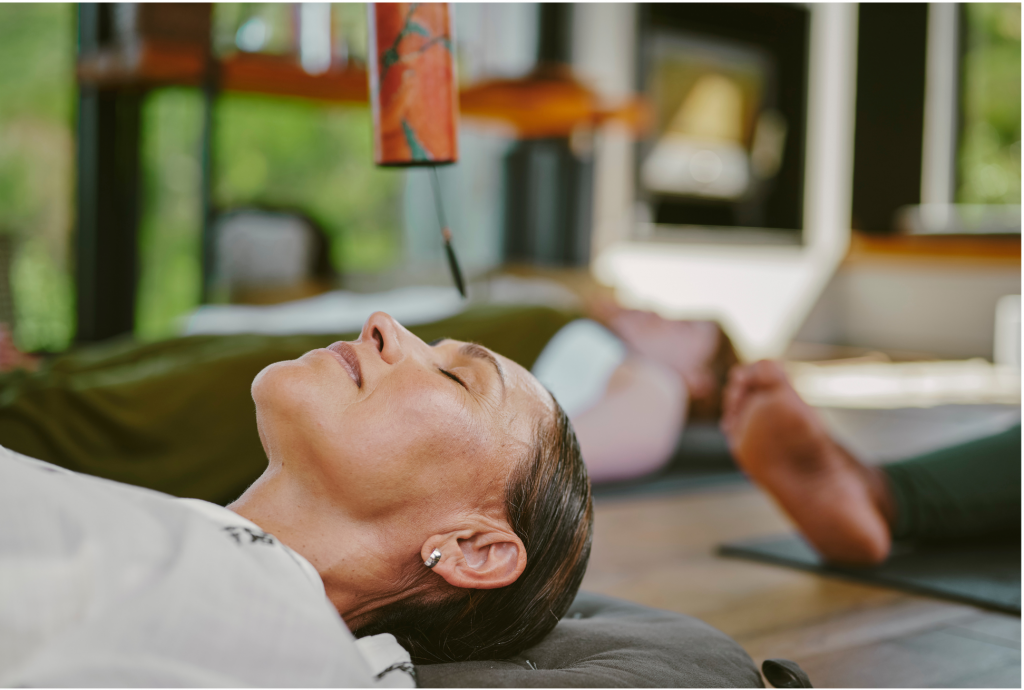
Through practices such as breathing, meditation, guided relaxation, sound baths, journaling, you feel your nervous system start to calm down. With much less time on your cell phone, your mind can relax and unwind. In that more relaxed and open space, the things that are still in need of healing, or problems that have been weighing on you, start to come to the surface. In your place of rest and quiet, solutions, answers and new perspectives arise without trying. Clarity can emerge once we stop rushing through life.
Healing Happens Faster in Sacred Space
When you are in sacred space, you’ll often notice that physical and emotional process time accelerates. As your body and mind unwind, your entire system begins to soften. And then you breathe differently. You sleep differently, and you think differently. You remember that life is more than just survival.
Join Us
At the OHM Center, our retreats are designed to help you step away from the noise of everyday life and reconnect with what matters most. Through meditation, healing practices, spiritual teaching, reflection, and community, we create a space where transformation can happen naturally and authentically.
Sometimes the most important thing you can do is pause long enough to truly listen to yourself again. Your soul might already be asking for it!
Our next retreat: June 5-7, 2026 (All day Friday, Saturday and finishes Sunday 1pm)
By Suzanne M. Hill, M.Sc., L.Ac., OHM Center Founder & Teacher
The OHM Center was founded in 2019 and is dedicated to helping people love themselves, love others, and enjoy their lives. Classes 7 days a week, join us sometime!
OHM Center, 1143 First Avenue, NYC NY 10065 212-557-6216